Executive Summary
TransO2 reframes environmental performance as a railway systems-engineering problem — not a bolt-on sustainability feature.
Overview
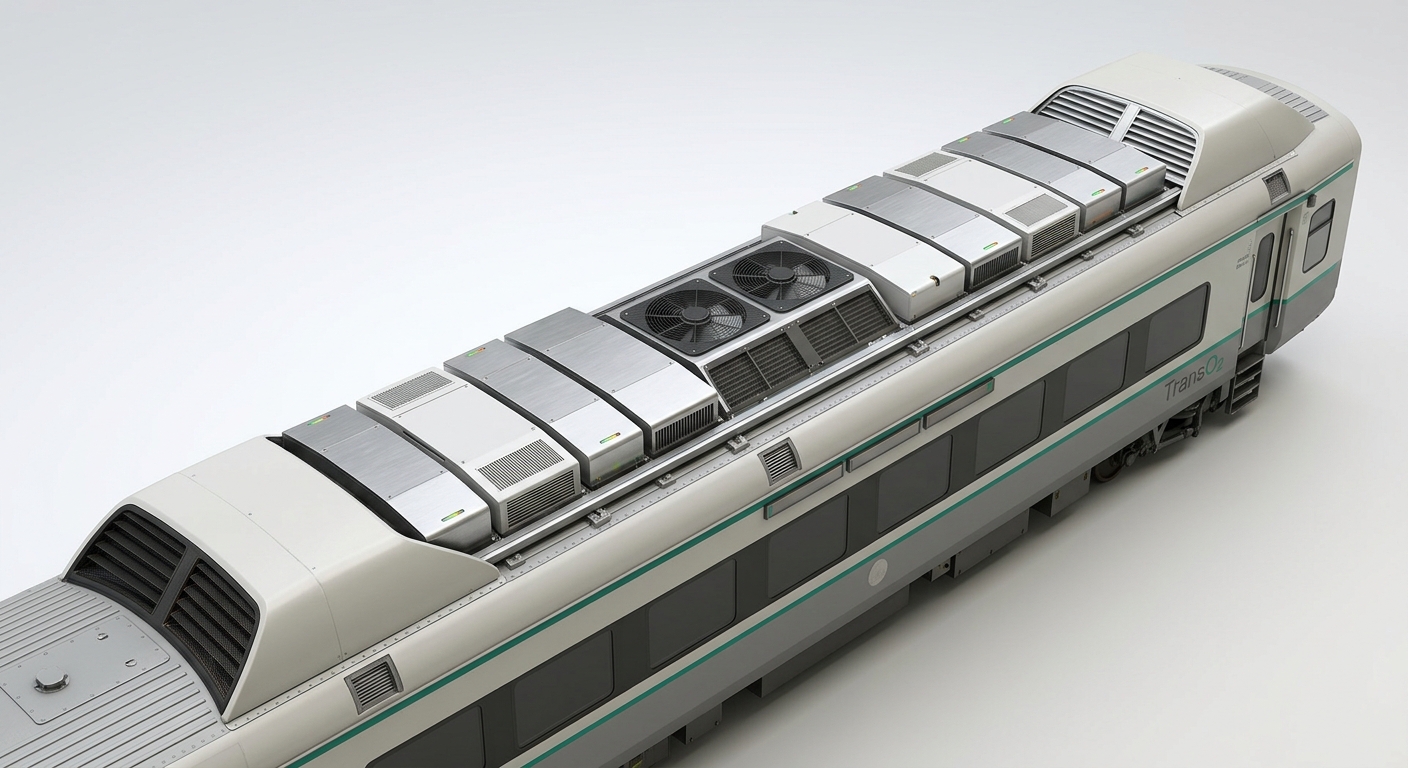
TransO2 is a modular Environmental Operating System for railway rolling stock, integrating air, thermal, energy, safety, water and digital intelligence into one architecture: AERIS-A, THERM-R, ENERGY, SAFE-C, AQUA-R, CARB-X and CORE-ERMC.
Why A Systems Approach
Environmental performance in a railway coach is not one component — it is the interaction of air intake, thermal load, electrical supply, safety systems and water recovery, all constrained by weight, space and railway safety standards. Treating these as one integrated architecture, coordinated by CORE-ERMC, allows each subsystem to be engineered against the same safety case rather than as isolated add-ons.
This publication describes conceptual frameworks and proposed architectures. Where quantitative figures appear, they are engineering projections intended for planning and are subject to experimental validation.
Engineering Discipline
Every module in this architecture carries an explicit status — concept, simulation, R&D, or validated — and no module claims deployment, certification or measured performance unless expressly stated.
Glossary
References
References point to established engineering disciplines and public frameworks, not fabricated citations.
- TransO2 Engineering Team — internal architecture documentation
- General railway systems-engineering practice
Suggested Citation
TransO2 Engineering Team. Environmental Engineering as a Railway Discipline. Knowledge Centre Publication WP-101. TransO2. v1.0. 2026.
About TransO2
TransO2 is developing a modular Environmental Operating System for railway rolling stock — integrating air, thermal, energy, safety, water and digital intelligence. Engineering concepts and performance targets are subject to detailed design, testing, validation and certification.