Executive Summary
SAFE-C's seven-stage sequence is engineered to isolate and control, not to discharge suppression agents into passenger compartments.
Sequence
Detect → Verify → Isolate → Suppress/Control → Alarm → Record → Post-event monitoring. Each stage is a discrete, logged event.
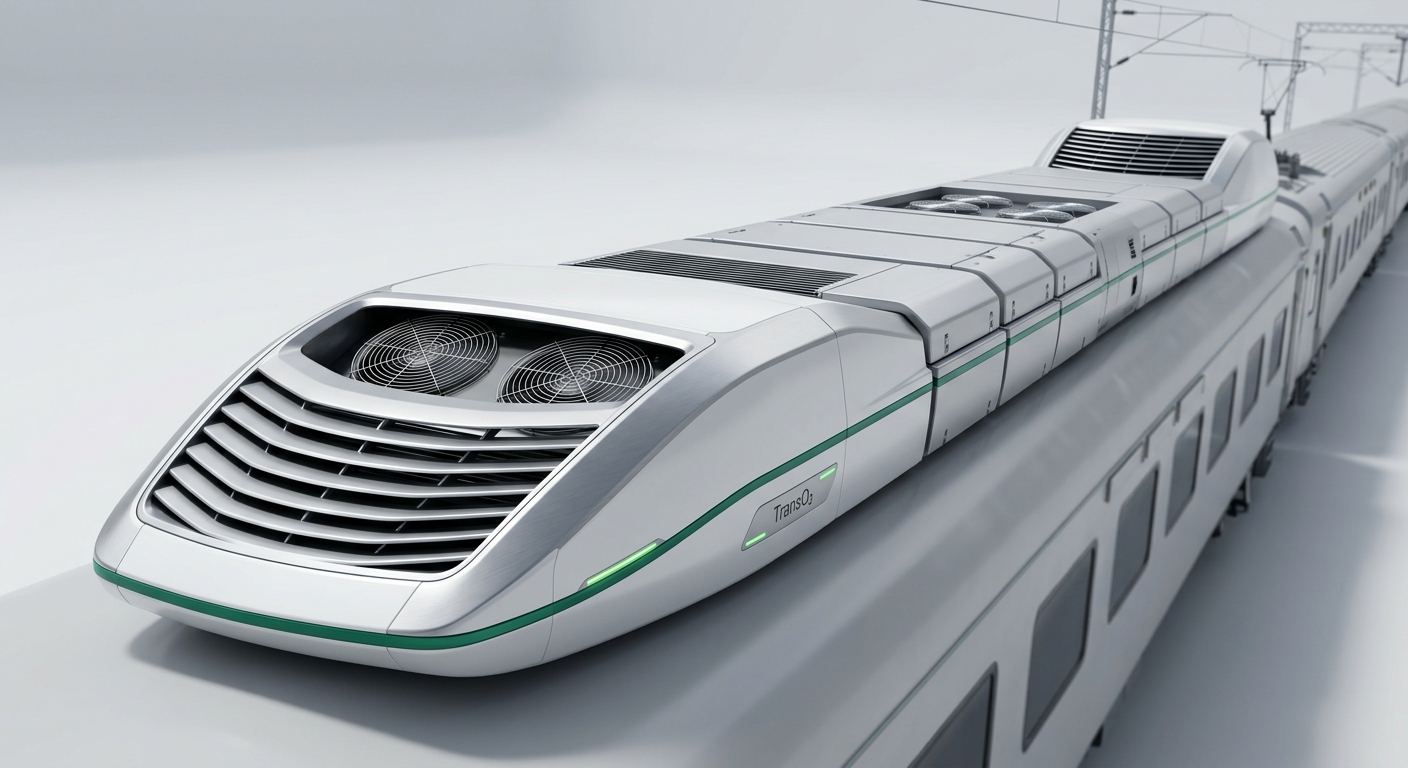
No Passenger-Space Discharge
SAFE-C does not discharge CO2 or any other suppression agent into passenger compartments. Suppression/control is executed strictly according to an approved, certified configuration for the relevant equipment zone — electrical panels, pantry and brake systems, for example — not the cabin.
This publication describes conceptual frameworks and proposed architectures. Where quantitative figures appear, they are engineering projections intended for planning and are subject to experimental validation.
Standards Context
Fire protection on railway rolling stock is governed by standards such as EN 45545; TransO2 treats these as a reference framework for engineering design, not as an existing certification claim.
Glossary
References
References point to established engineering disciplines and public frameworks, not fabricated citations.
- EN 45545 — Fire protection on railway vehicles (reference standard)
- TransO2 SAFE-C architecture documentation
Suggested Citation
TransO2 Engineering Team. SAFE-C: A Detect-to-Record Safety Architecture. Knowledge Centre Publication EN-104. TransO2. v1.0. 2025.
About TransO2
TransO2 is developing a modular Environmental Operating System for railway rolling stock — integrating air, thermal, energy, safety, water and digital intelligence. Engineering concepts and performance targets are subject to detailed design, testing, validation and certification.